After three days in Northern Ireland to visit South West College, one of the conclusions is that blended learning works very well. Never mind the elegant ways ILT is integrated into their classrooms, in 2012 they held their Virtual Week which was the real eye opener.
The idea was to tutor for five days without any student coming in to class. I wouldn't say that this is the only way to promote blended learning, but it shows to teachers and students alike that any course lends itself to the blended approach.
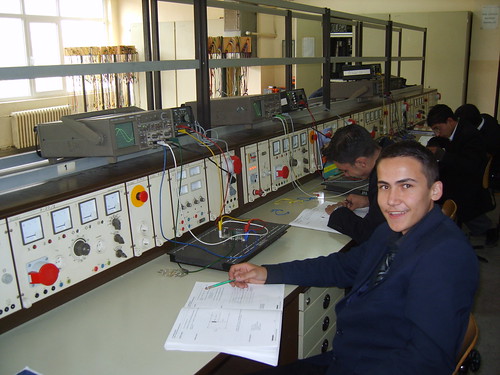
Teachers in vocational teaching and training often say that electronically enhanced learning cannot be achieved in their field. The SWC example shows just how easily it can be done. In most cases, it will support the learning but it's possible to hold distance learning classes in VET. The thing is, it will demand some extra preparation work of teachers and students alike. this demands a specific motivation.
The most important lesson I take away from this experiment is that if there are enough determined staff, an experience such as this is very rewarding and can be highly succesful. You don't have to wait for heavy snow and disrupted transport systems to find an incentive to use blended learning in vocational training.
And as most people have already experienced, we're seeing ever more severe climate effects from snow to flooding and in Western Europe, we're just not used to the consequences. Yet.
The idea was to tutor for five days without any student coming in to class. I wouldn't say that this is the only way to promote blended learning, but it shows to teachers and students alike that any course lends itself to the blended approach.
Teachers in vocational teaching and training often say that electronically enhanced learning cannot be achieved in their field. The SWC example shows just how easily it can be done. In most cases, it will support the learning but it's possible to hold distance learning classes in VET. The thing is, it will demand some extra preparation work of teachers and students alike. this demands a specific motivation.
The most important lesson I take away from this experiment is that if there are enough determined staff, an experience such as this is very rewarding and can be highly succesful. You don't have to wait for heavy snow and disrupted transport systems to find an incentive to use blended learning in vocational training.
And as most people have already experienced, we're seeing ever more severe climate effects from snow to flooding and in Western Europe, we're just not used to the consequences. Yet.